|
On International Day of Friendship, we hosted The Australian Loneliness Dialogue 2026: The Mind Body Connection, Rethinking Loneliness for Whole Person Wellbeing.
The event brought together researchers, practitioners, community leaders and people with Lived and Living Experience to explore loneliness through a whole-person lens.
Across the day, one message came through clearly: loneliness may be experienced by an individual, but it is shaped by our relationships, identities, communities and the systems around us.
Dr Darren Morton: why connection matters
Opening the Dialogue, Dr Darren Morton reminded us that human beings are social creatures, designed to live in community and connect with one another. He explored how relationships influence our emotional wellbeing and physical health, with effects that extend into families, workplaces and communities.
Nerida Dye: libraries as places of welcome
Nerida Dye shared how public libraries can become trusted places of welcome, information and social connection. Her presentation highlighted the role familiar community spaces can play in helping people feel they belong.
Dr Kim Gordon: understanding unbelonging
Dr Kim Gordon explored the loneliness of unbelonging and how racism, discrimination and exclusion can leave people feeling like outsiders, even within their own communities. Her presentation invited us to consider whose experiences are overlooked and what it means to feel accepted.
Libby Cross: the importance of local connection
In the final panel, Libby Cross reflected on the global reach of loneliness and the importance of local responses. The panel also questioned the assumption that belonging requires a large social network, exploring the difference one meaningful relationship can make.
Connection in practice
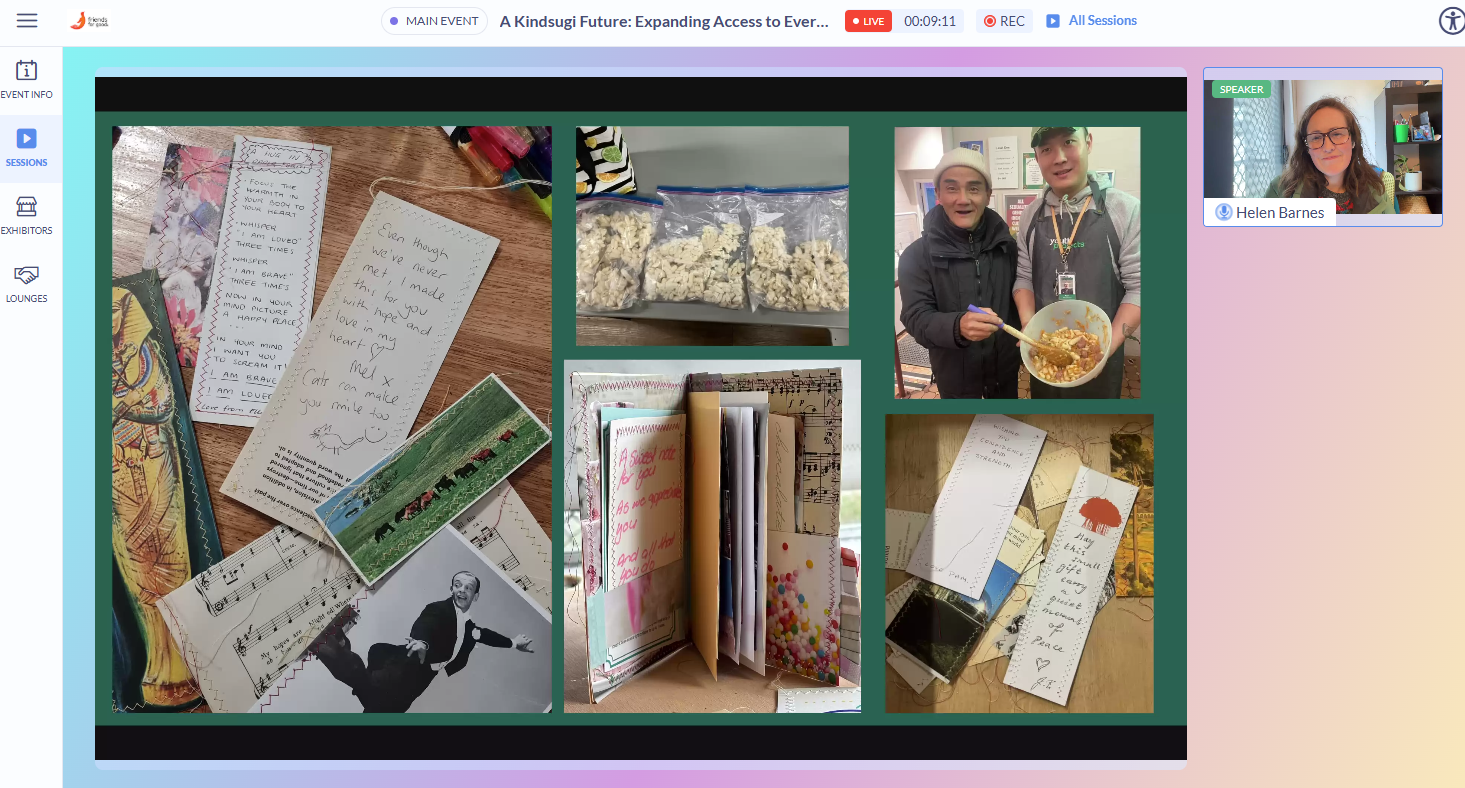
The day also explored belonging through education, creativity and shared participation. Joel McKay shared how Hester Hornbrook Academy builds trust and relationships with young people reconnecting with education, while Helen Barnes introduced A Kindsugi Future’s work around creativity, kindness and contribution.
Participants experienced connection through Mosaik Experiences’ theatre, movement, music and storytelling workshop, and explored connected communities with The Resilience Canopy. Discussions led by Professor Alan Petersen considered how technology and artificial intelligence might support human relationships.
In the final panel, Associate Professor Nicholas Van Dam joined Libby Cross and Associate Professor Roisin McNaney to explore the intersections between loneliness, health, community, technology and policy, and the difference one meaningful relationship can make.
Thank you to all our speakers, workshop facilitators and participants for sharing your knowledge, experiences and questions throughout the day.
The Dialogue was a reminder that addressing loneliness requires us to look beyond the individual and consider how we create communities, services and systems that foster genuine connection and belonging.
We hope the conversations and ideas shared throughout the day continue to inspire action, collaboration and new ways of thinking about loneliness and social connection.
|